BOOKING
Hagen vår skulle være et sted vi ville oppsøke selv. Litt vill, og veldig frodig og fargerik. Den skulle være et sted for alle sansene våre, men også matnyttig: gi oss mat på bordet. I hagen vår vil finner du sitteplasser der du kannyte synet av blomster og fossene som slynger seg ned fjellsidene. Vi har ogsåsmykket ut tun og hage med kunst fra «artists in residence»: Edith Lundebrekkeog Kaja Dahl. Edith Lundebrekkes arbeid kan du finne i Nasjonalmuséet, hun harogså representert Norge på flere kunstbiennaler og trerelieffene hennes har løftet en rekke offentlige bygg. Edith er inspirert av mønstrene i gammel tekstilkunst, og utforsker stedets karakter grundig før hun gir det sitt uttrykk. Edit er opptatt av koblinga mellom funksjon og estetikk. Kunsten hennes finner du på låveveggen vår.


Kaja Dahl har laget benken vår i hagen mot jordet, der hun med sine vridde takskiferplater har forsøkt å fange opp essensen av naturen rundt oss: en helix. Som elva bukter seg mot fjorden, som fjorden bukter seg mot havet, som veiene bukter seg rundt fjell. Kaja fanget på sitt vis DNAet i naturen rundt oss i sin skulptur. «Her er det så mye vill natur, den tåler kultiverte former». Kaja er først og fremst en steinkunstner, og her fant hun nok – stein...
Gå på en oppdagelsesreise i hagen vår, da vel!




Vi inviterer deg til å gå på oppdagelsesferd hos oss. Både innendørs og utendørs er det spor etter kunstnere som har bodd her, i tillegg til at vi har samlet og kjøpt inn kunst fra kunstnere som har røtter i området: fotokunstner Jens Hauge og maler Knut Rumohr.
Opp igjennom årene har vi invitert «artists in residence», som får carte blanche til å uttrykke seg som de vil, etter at de har fanget inn «sense of the place», stedets ånd.
Aurlandselva ble i sin tid rangert som en av de tre beste fluefiskeelvene i verden av de britiske «lakselordene» som kom hit for å fiske. Den svenske «Ekman-familien» og den britiske Buxton-familien er de som har tilbrakt mest tid her, og alle svart-hvitt-bildene på gården er donert av Ekman-familien, og akvarellene i Fiskehuset er malt av Teresa Buxton som malte ved elva mens hun passet nevøer og nieser.

Gatekunstner«Newton» har vært her, andre kunstnere som har hatt «artist in residence»-opphold her og etterlatt seg kunst, er Edith Lundebrekke som har satt opp de fargerike trespilene på låven, inspirert av gamle norske strikkemønster. Hennes kunst er en ode til gammelt, norsk håndtverk, i et nytt uttrykk. Edith har utsmykket en rekke offentlige bygg, og har representert Norge internasjonalt på flere biennaler. Kunsten hennes finner du også i Nasjonalgalleriet.
Kaja Dahl jobber hovedsaklig med stein, og lot seg inspirere av hvordan naturen her lar seg uttrykke i en spiral: fosser, elv, fjord: alt bukter seg rundt og ut til havet. Dahl har laget benken nede ved grønnsaksåkeren med utsikt mot fossen av materialer hun fant på gården.
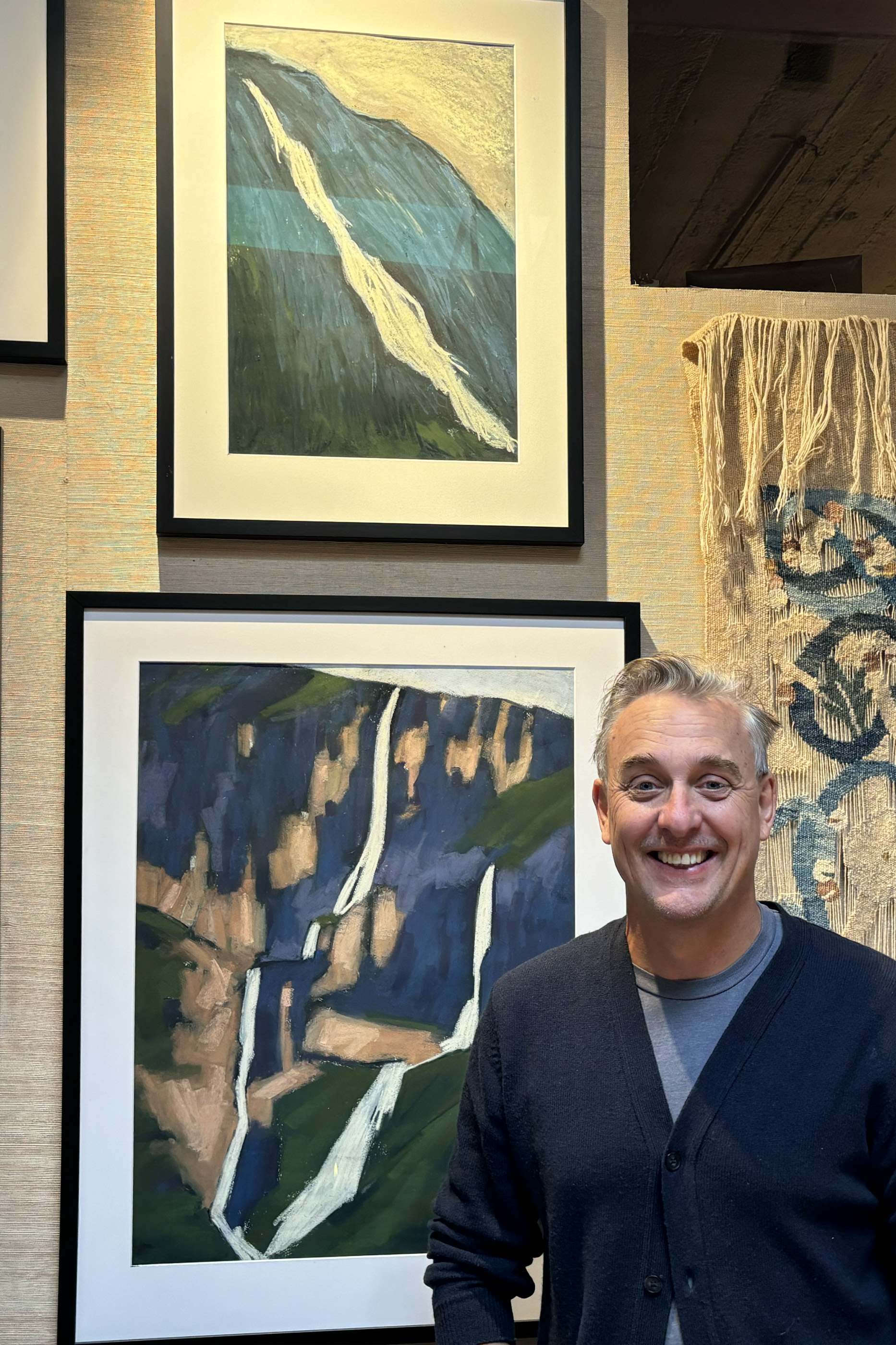
New Zealandske Peter Force vært her og laget pastellmaleriene på veggen i restauranten av fossene vi har rundt oss. Han reiste med svigerfaren sin som led av demens, og fossene ble for Pete et bilde på minnene våre som forsvinner, og egen dødelighet, men også på den enorme livskraften i oss selv og i naturen rundt oss.
Bergensbaserte og fargerike Lillian Presthus er artist in residence våren 2026. Lillian har både jobbet med foto og grafikk, eksperimentert med lysets brytning i glass, men det er maleriet og fargens uttrykkskraft som står sterkest i hennes kunstneriske virke.
Gå på oppdagelsesferd, da vel!